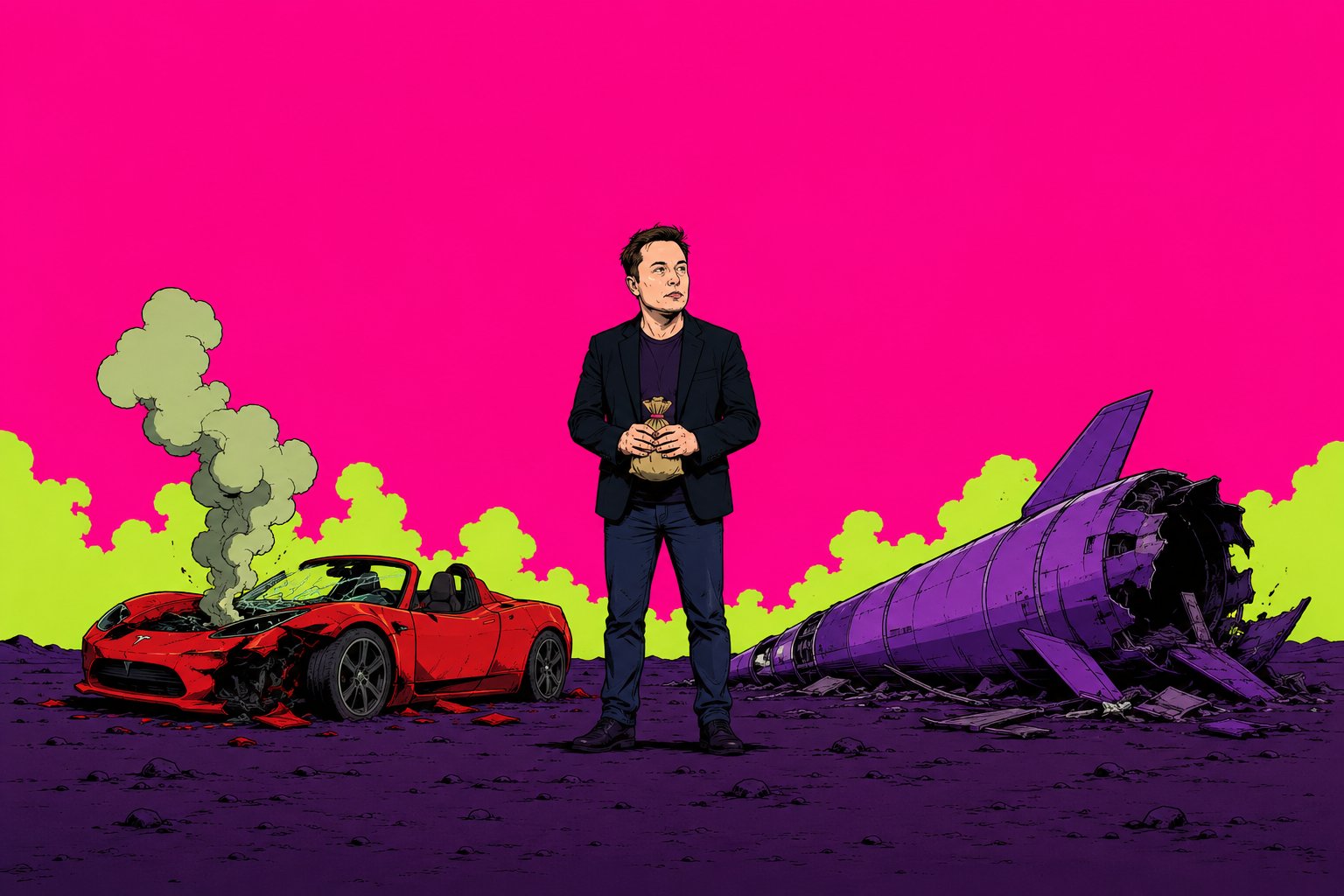
By the middle of 2008, Elon Musk was, on paper, one of the most successful entrepreneurs of his generation. He had sold his first company, Zip2, in the first internet boom, then made about $180 million from the sale of PayPal to eBay. And he had poured essentially all of it into the two least reasonable businesses imaginable: an electric-car startup and a private rocket company. Both were widely expected to fail. In 2008, both very nearly did — at the same time.
At Tesla, the trouble was the Roadster, the company's first car. It was a genuine breakthrough — the first highway-legal electric sports car — and a production nightmare: the transmission had to be redesigned, costs per car ran far beyond the sticker price, and the company was burning through cash just as the global financial crisis slammed the door on new funding. That October, Musk took over as chief executive himself and cut a quarter of the staff to slow the bleeding.
“I remember waking up the Sunday before Christmas in 2008, and thinking to myself: man, I never thought I was someone who could ever be capable of a nervous breakdown.”
Elon Musk, 60 Minutes, 2014At SpaceX, the situation was arguably worse. The company had spent six years building its first rocket, the Falcon 1, and had launched it three times from a tiny Pacific atoll. All three launches failed. The third, in August 2008, was carrying NASA satellites and the ashes of James Doohan — Star Trek's Scotty. After it broke apart, SpaceX had money left for roughly one more attempt.
The failures bled into Musk's personal life. He was going through a divorce, sleeping badly, and borrowing money from friends to cover living expenses — a strange condition for a man who had recently been worth hundreds of millions of dollars. He later told 60 Minutes that he woke up the Sunday before Christmas 2008 thinking he had never believed he was a person capable of a nervous breakdown — until then.
The brutal decision of 2008 was arithmetic: his remaining money could plausibly save one company. Focusing everything on Tesla meant certain death for SpaceX; focusing on SpaceX meant certain death for Tesla. Musk chose the option every adviser warns against — he split what he had left between the two, keeping both alive and risking losing both.
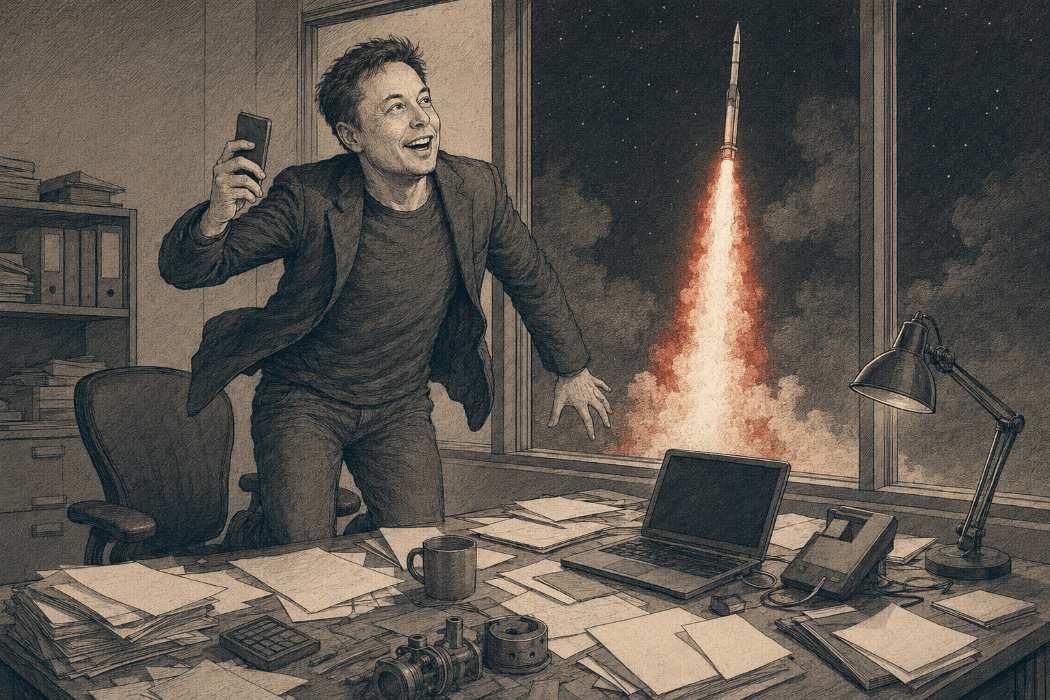
Then, in the space of three months, everything turned. On September 28, 2008, the fourth Falcon 1 launch reached orbit — the first privately developed liquid-fuel rocket ever to do so. The company that had been three-for-three in failures was suddenly the company that had done what only governments had done before.
In December, NASA called: SpaceX had won a $1.6 billion contract to resupply the International Space Station. Musk has described nearly falling apart on that phone call. A day later, on Christmas Eve, Tesla's investors closed a rescue financing round in the final hours before the company would have run out of money.
Both companies lived, and then some: Tesla went on to become the world's most valuable carmaker, and SpaceX the world's dominant rocket launcher. Musk still calls 2008 the worst year of his life — which is precisely what makes it the defining case study in not letting a terrible year make the decision for you.
Questions
What happened to Elon Musk in 2008?
Elon Musk nearly lost both of his companies at once. Tesla was burning cash on the Roadster as the financial crisis shut off new funding, and SpaceX's Falcon 1 had failed three launches in a row; Musk still calls 2008 the worst year of his life.
Was Elon Musk broke in 2008?
Nearly. Elon Musk had put essentially all of the roughly $180 million he made from the sale of PayPal into Tesla and SpaceX; in 2008 both were on the brink of bankruptcy, and he was borrowing money from friends to cover living expenses.
How did Elon Musk save Tesla and SpaceX in 2008?
Elon Musk split his remaining money between the two companies instead of saving just one. Then the fourth Falcon 1 launch reached orbit on September 28, 2008, SpaceX won a $1.6 billion NASA contract in December, and Tesla closed a rescue round on Christmas Eve.