Milton Hershey had almost no schooling and exactly one skill. The son of a steady Mennonite mother and a father who chased schemes across Pennsylvania, he left the classroom for good around fourth grade and, at fifteen, was apprenticed to a Lancaster candy maker. Sugar work was the one classroom he never left.
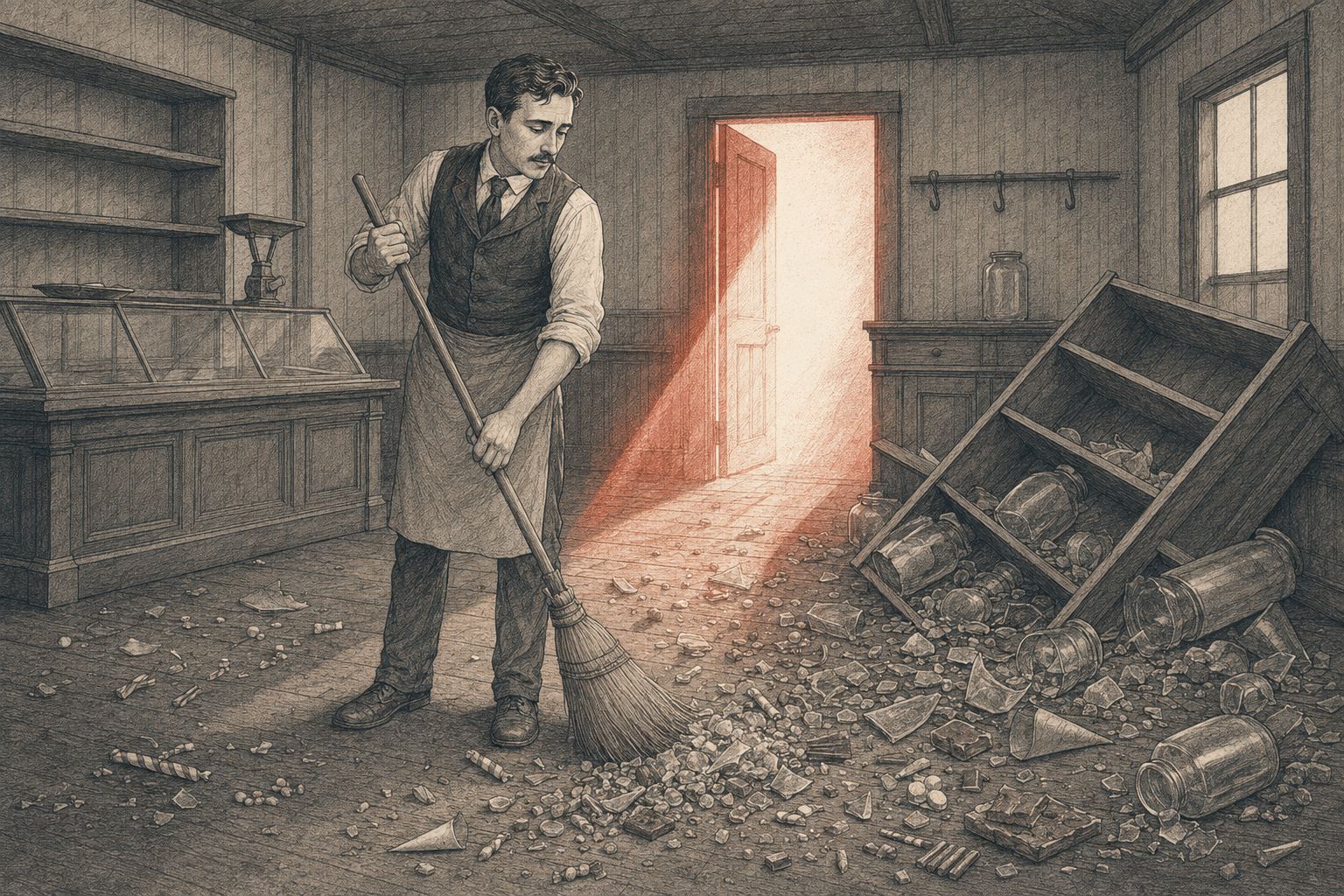
At eighteen he struck out for Philadelphia and opened his own shop during the Centennial Exhibition, when the city swelled with visitors. For six years he boiled candy at night and hauled it to customers by day, wearing himself to exhaustion while borrowing from relatives to cover the gaps. In 1882 the business failed anyway.
“Caramels are only a fad. Chocolate is a permanent thing.”
Milton Hershey, as recounted in company historiesThe next act was a masterclass in collecting useful defeats. In Denver, working for a confectioner, he learned the trade secret that would eventually make him: caramel made with fresh milk stayed soft, keeping longer and tasting better. Ventures in Chicago and then New York followed — and collapsed, the New York shop going under in 1886. By then his relatives had stopped lending; the family verdict was that Milton was a good candy man and a hopeless businessman.
He went back to Lancaster with nothing and started the Lancaster Caramel Company on the milk-caramel recipe. The break came when an English importer, taken with the candy, placed an order big enough to require a serious bank loan — a loan Hershey secured and repaid off that single order. The company that no one would fund grew into an operation employing well over a thousand people.
In 1893, at the World's Columbian Exposition in Chicago, Hershey stood transfixed by a German exhibit of chocolate-making machinery. He bought the equipment and had it shipped to Lancaster. To his colleagues' bafflement, he then made the least sentimental decision of his life: in 1900 he sold the caramel company — his first success, the vindication of all the failures — for one million dollars, to bet on chocolate.
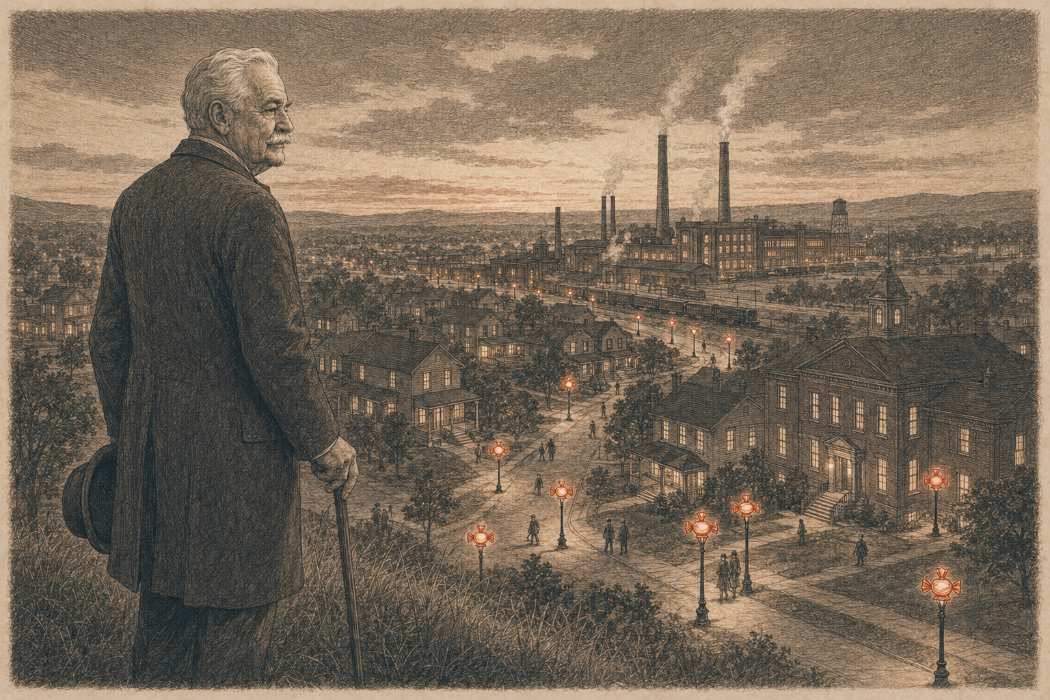
'Caramels are only a fad. Chocolate is a permanent thing,' he reportedly declared. Milk chocolate was then a Swiss luxury craft; Hershey resolved to make it an affordable, mass-produced staple. In the farmland of his native Derry Township — close to the dairy herds his process needed — he spent years of messy trial and error on formulas, then built the world's largest chocolate factory, and around it a town: houses, schools, parks, a trolley system, eventually an amusement park.
The Hershey bar became the first mass-market milk chocolate in America, and the town of Hershey, Pennsylvania became the strangest monument any failed shopkeeper ever built. Childless, Hershey funneled the fortune into a school for orphaned boys — and in 1918 secretly signed over essentially his entire stake to its trust, a gift not discovered by the press for years. That trust controls the company to this day.
The arc from bankrupt at twenty-eight to institution is not a story of sudden genius. Every failed shop had deposited something — the Denver milk trick, the wholesale lessons of New York, the caution about fads — until the pieces finally assembled into one of the most durable consumer companies on earth.
Questions
How many times did Milton Hershey fail?
Three times: Milton Hershey's first candy shop in Philadelphia failed in 1882 after six years, and his ventures in Chicago and New York collapsed too, the New York shop in 1886. His relatives stopped lending, and he went back to Lancaster with nothing.
What was the Lancaster Caramel Company?
The Lancaster Caramel Company was Milton Hershey's first success, built on a soft caramel made with fresh milk, a trick he learned in Denver. One big order from an English importer got it going, and it grew to employ well over a thousand people.
Why did Milton Hershey sell his caramel company?
To bet on chocolate: in 1900 Milton Hershey sold the Lancaster Caramel Company for one million dollars, having bought German chocolate-making machinery at the 1893 World's Columbian Exposition in Chicago. He reportedly called caramels only a fad and chocolate a permanent thing.