By twenty-two, Oprah Winfrey looked like a television prodigy. Out of a childhood of rural Mississippi poverty she had talked her way onto Nashville radio as a teenager, then become a local news anchor while still in college. In 1976, Baltimore's WJZ-TV recruited her across the country to co-anchor its six o'clock news — billboards all over town announced her arrival.
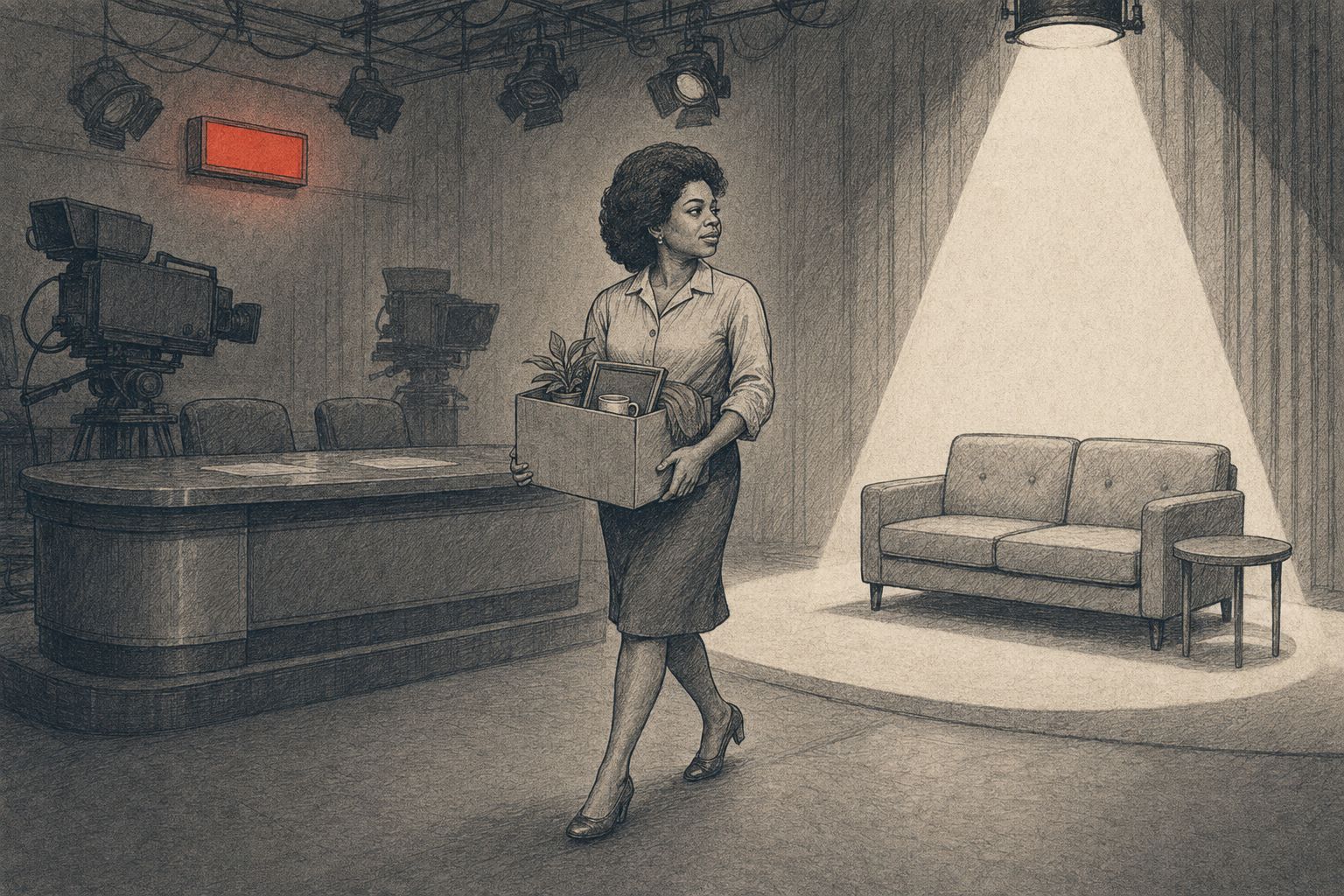
The experiment curdled fast. She was, by her own account, terrible at the core disciplines of hard news: she cried with the people she interviewed, ad-libbed past the script, felt every story instead of reading it. Ratings sagged. On April 1, 1977 — she has noted the date's comedy ever since — the station called her in and removed her from the anchor desk, softening the blow with a promise of vague 'special assignments' and morning cut-ins.
“Failure is just life trying to move us in another direction.”
Oprah Winfrey, Harvard commencement address, 2013The humiliations piled up in ways that would sound invented if she hadn't told them herself: executives suggested she change her name to something friendlier; a station makeover sent her to a French salon whose treatment made her hair fall out, leaving her to anchor the leftovers of her career in a wig. She was twenty-three, publicly failed, and contractually stuck — too expensive to fire, too damaged to promote.
Then the station needed a warm body for a new local morning program. On August 14, 1978, she sat down next to co-host Richard Sher for the debut of People Are Talking, expecting little. She has described coming off that first show with the feeling that would organize the rest of her life: this — not the news desk — was what she was supposed to do.
Everything that made her wrong for news made her lethal at a talk table. The empathy that broke her composure over tragedies made guests tell her things they had never said aloud; the ad-libbing became connection. The local show found its audience and held its own against the national king of the format, Phil Donahue, in the Baltimore market.
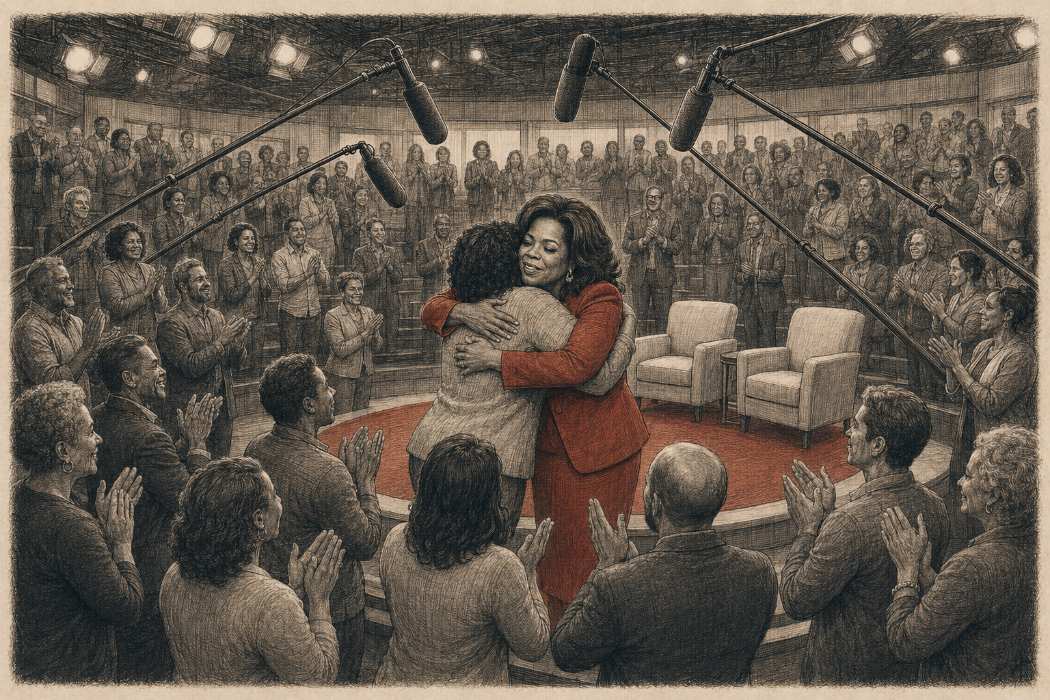
In January 1984 she bet on herself again, moving to Chicago to host AM Chicago — a morning show so deep in last place it was considered a burial. Within months it had overtaken Donahue on his home turf. Renamed The Oprah Winfrey Show, it went into national syndication in September 1986 — at the urging, among others, of film critic Roger Ebert, who had done the math on syndication money.
The show ran twenty-five seasons as the highest-rated talk program in American television history. Winfrey took ownership of it through her company Harpo — becoming one of the first women, and the first Black woman, to own her own studio — and built the demotion of 1977 into a media empire that made her a billionaire.
She has retold the Baltimore story at commencements for decades, always with the same punchline of hindsight: the station didn't take away her future; it took away the wrong one. Or, as she put it at Harvard — failure is just life trying to move us in another direction.
Questions
Why was Oprah Winfrey demoted?
Oprah Winfrey was, by her own account, terrible at hard news: she cried with the people she interviewed, ad-libbed past the script and felt every story instead of reading it. Ratings sagged, and on April 1, 1977, WJZ-TV in Baltimore removed her from the anchor desk.
Was Oprah Winfrey fired from her news job?
No: in 1977 WJZ-TV removed Oprah Winfrey, then twenty-three, from its evening news co-anchor chair, but she was too expensive to fire. The station moved her into lower-profile slots, with vague 'special assignments' and morning cut-ins.
How did Oprah Winfrey get her talk show?
On August 14, 1978, Oprah Winfrey debuted with co-host Richard Sher on WJZ-TV's new local morning program, People Are Talking. In January 1984 she moved to Chicago to host AM Chicago, which became The Oprah Winfrey Show and went into national syndication in September 1986.