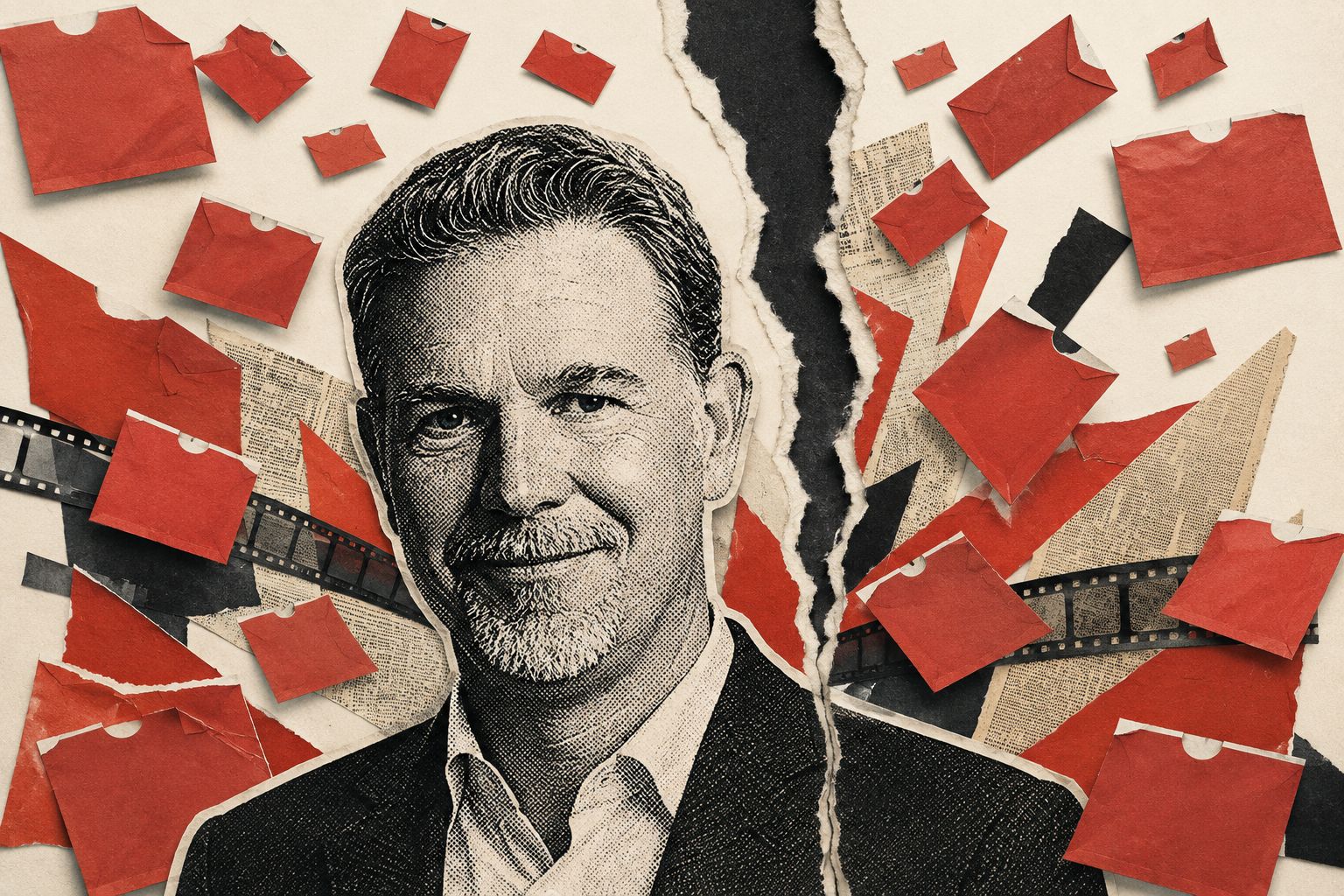
In the summer of 2011, Netflix was untouchable: nearly 25 million American subscribers, a stock near $300, and a CEO, Reed Hastings, regularly celebrated as the smartest strategist in media. He could see plainly that streaming was the future and DVDs-by-mail the past. His mistake was making the future mandatory, immediately, at his customers' expense.
In July, Netflix split its beloved all-in-one subscription. Keeping both DVDs and streaming would now cost $15.98 instead of $9.99 — an effective 60% increase, announced in a chipper blog post that radiated indifference. Customers were furious, and said so by the tens of thousands in the comments.
“I messed up. I owe everyone an explanation.”
Reed Hastings, September 2011Then came the September 18 blog post that entered business-school history. It opened with a genuinely humble apology — 'I messed up. I owe everyone an explanation' — and proceeded, in the same breath, to make everything worse: the DVD business would be spun off into a separate company called Qwikster, with its own website, its own queue, its own bill, and separate ratings. Fixing the movie night now required two accounts.
The internet did the rest. It emerged that Netflix didn't even own the @Qwikster handle on Twitter — it belonged to a young man whose avatar was a stoned Elmo — and Saturday Night Live turned the announcement into a sketch. In the third quarter, about 800,000 US subscribers walked. By year's end the stock had fallen roughly 75% from its summer peak.
On October 10, three weeks after announcing Qwikster, Hastings killed it. The DVD service would stay at netflix.com, he wrote, conceding: 'There is a difference between moving quickly — which Netflix has done very well for years — and moving too fast, which is what we did in this case.'
What distinguishes the Qwikster fiasco from ordinary corporate face-plants is what it didn't change. Hastings had been right about the destination — DVDs were dying, streaming was everything — and wrong only about the forced march. So Netflix kept the strategy and rebuilt the trust: it went quiet, went international, and went all-in on the thing that would make its subscription irreplaceable.
That thing arrived on February 1, 2013: House of Cards, the first tentpole of a colossal original-content bet. Streaming stopped being a cheaper way to watch other people's shows and became the only place to watch Netflix's. Subscribers returned, then multiplied into the hundreds of millions; the stock that had cratered became one of the decade's great performers.
Netflix now tells the Qwikster story about itself, in public, as a warning: the fastest way to lose customers is to make your strategy their problem. And the fastest way to recover is the one Hastings chose — a real apology, a fast retreat, and years of quietly earning back what three weeks of arrogance had burned.
Questions
What was Qwikster?
Qwikster was Netflix's planned spin-off of its DVD business, announced on September 18, 2011: a separate company with its own website, queue, bill and ratings, so customers who wanted DVDs and streaming would have needed two accounts.
How many subscribers did Netflix lose over Qwikster?
About 800,000 US subscribers left Netflix in the third quarter of 2011, after the price of DVDs plus streaming rose from $9.99 to $15.98 and Qwikster was announced. By year's end the stock had fallen roughly 75% from its summer peak.
How long did Qwikster last?
About three weeks, from September 18 to October 10, 2011. After the backlash, Reed Hastings killed Qwikster, kept the DVD service at netflix.com and conceded that Netflix had moved too fast.