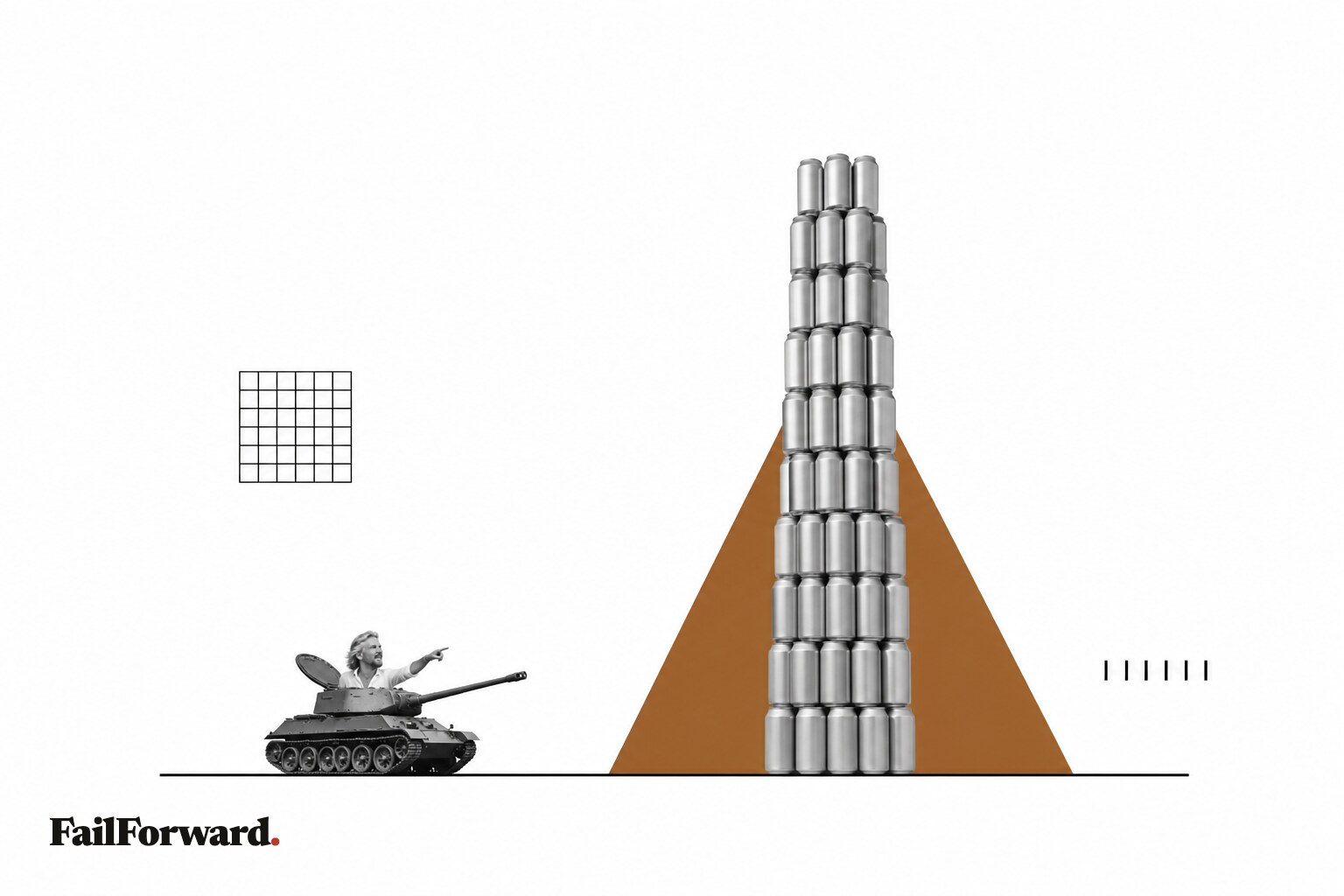
On Tuesday, May 12, 1998, Richard Branson rode an army tank into Times Square. It rolled over a wall of stacked cola cans, and its gun was turned toward the Coca-Cola sign above the square. "I am so excited by the thought of Virgin Cola taking on Coke and Pepsi in their home territory," Branson said in a statement.
The drink had been on sale in Britain since November 1994, first in Tesco and Iceland stores. It was made by Cott, a Canadian supplier of store-brand colas that already produced Sainsbury's Classic Cola, through a joint venture with Virgin. Cans were to sell for just under 30p, below Coke and Pepsi, and Branson predicted the cola could grow as large as Virgin Atlantic within four years. His brother-in-law Robert Devereux, chairman of Virgin Communications, rang to tell him it would cheapen the Virgin name. Branson overruled him.
“We had a great brand. But Coke had a great brand. The taste of the Cola was maybe marginally better. But it was neither here nor there.”
Richard Branson, NPR's How I Built This, 2017He made no secret of the target. "We think we've got the weapons that can knock Coke sideways, if not knock them out one day," he told United Press International in Tokyo, in July 1995. "We are going to bring every weapon we have against Coke." Virgin was said to hold 10% of the British cola market. The European Commission, citing the drinks researcher Canadean, later put its overall share that year below 5%, earned mostly in two supermarket chains.
Coca-Cola answered with money. In 1995, as Virgin and the supermarkets' new premium colas cut into Coke's grocery sales, the company more than doubled its British advertising budget, from about £15 million to £37 million, the Commission found. Coke's British business plan for 1997–98 named their growth a priority concern. In November 1996 Virgin complained to the Commission that Coca-Cola Schweppes Beverages, Coke's bottler in Britain, was abusing its dominant position.
The figures did not move Virgin's way. In spring 1997 Nielsen gave it 3.7% of British cola sales by volume against Pepsi's 20%, and the frozen-food chain Iceland was preparing to drop it from 780 stores. Branson's own numbers were rosier: in May 1998 he told CNN that Virgin had edged past Pepsi the month before, 11.9% to 11.2%. By then Virgin had bought out Cott.
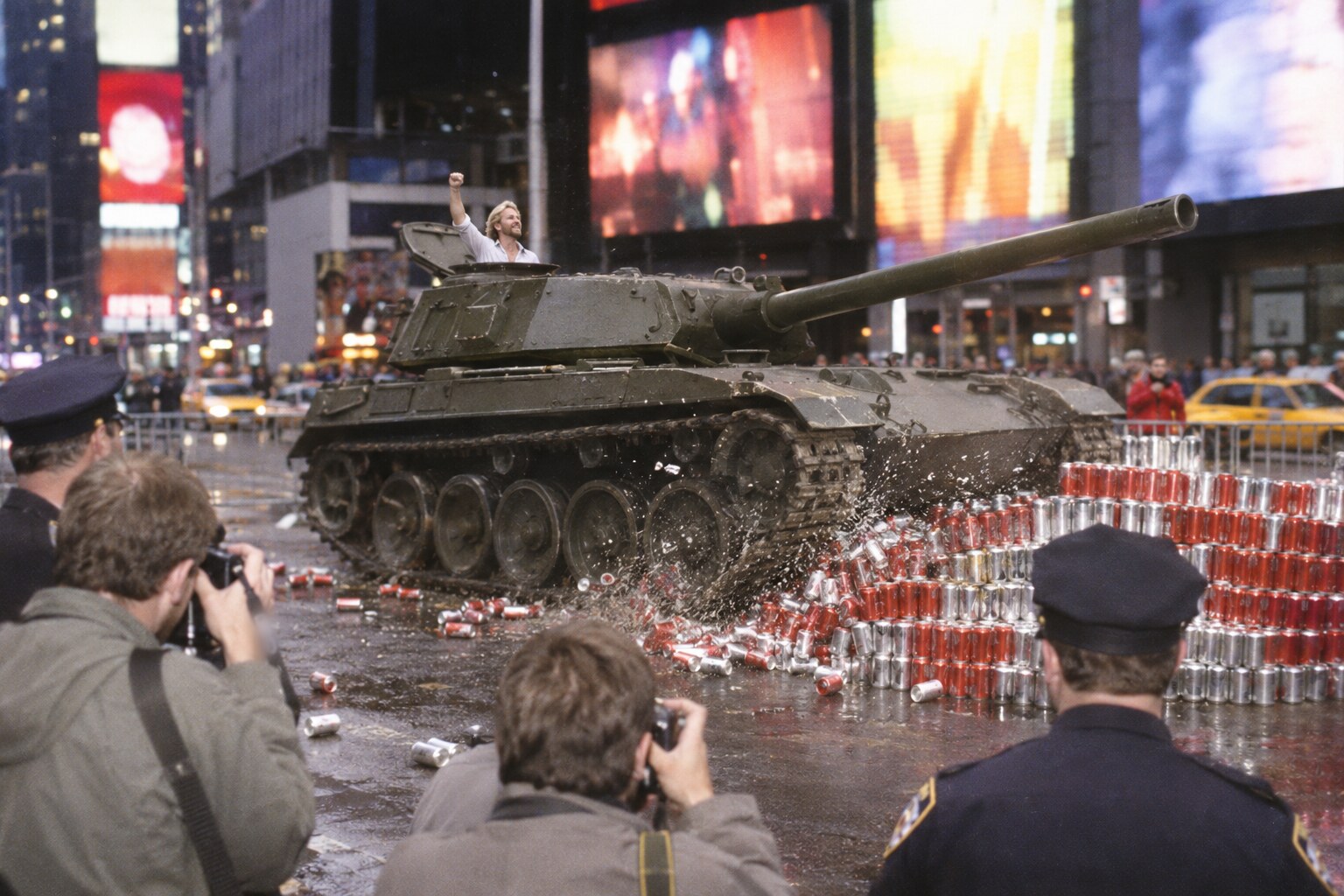
America went worse. Virgin Cola started in convenience stores in six cities, from New York to Los Angeles, and won a listing at Target. In March 2000 the trade weekly The Grocer cited reports that it held 0.1% of the US cola market. In April 2001 the American company was wound up with 0.5% of the market by volume, Marketing Week reported.
Branson blames Coca-Cola. Years later, he says, his new bank manager told him over dinner that, while working for Coke, she had warned its president that Virgin was "the one brand in the world that could actually topple Coke." A week later, by his account, the president told her: "I want you to get a full 747. We're gonna fill it up with SWAT teams." They flew to Britain, "and everywhere that Virgin was on display, suddenly, our products started disappearing off the shelves." Coca-Cola "went to retailers. They gave them offers they couldn't refuse," he told NPR in 2017. "It was a very systematic kneecapping job." Asked by CNBC in 2024, Coca-Cola declined to comment.
In Britain the brand passed to licensees, Princes Soft Drinks and then Silver Spring. In August 2009 Asda, one of its last big stockists, dropped it for poor sales. In September Silver Spring went into administration, and the buyer of its business chose not to take on the Virgin contract. Licensees abroad kept it going a few more years; Branson says he ended it when it was No. 1 only in Bangladesh.
His conclusion is about the product, not the tank. "The problem was that, you know, we didn't have something completely unique," he told NPR. "So since then what I learned from that was only to go into businesses where we were palpably better than all the competition." The Commission's 1997 decision had recorded the problem in drier terms: nearly all of Britain's premium store-brand colas, and Virgin Cola, were based on the same Royal Crown concentrate, for which Cott held the British license.
Questions
Why did Virgin Cola fail?
It was not different enough from Coke: Richard Branson later said its taste was "maybe marginally better" but "neither here nor there." Coca-Cola more than doubled its British advertising in 1995, and by Branson's account it pushed retailers to drop Virgin Cola.
What happened to Virgin Cola?
It faded out. The American company was wound up in April 2001 with 0.5% of the US market, and in 2009 Virgin Cola left British shelves after Asda dropped it and its licensed producer, Silver Spring, went into administration.
Why did Richard Branson drive a tank into Times Square?
To launch Virgin Cola in the United States. On May 12, 1998, Branson rode a tank over a wall of cola cans in Times Square and had its gun turned toward the Coca-Cola sign, taking on Coke and Pepsi in their home territory.
Sources
- "New enemy in the cola wars": Virgin Cola enters the U.S. market — CNNfn, May 12, 1998 (archived copy)
- Virgin launches cola attack on Japan — UPI, July 13, 1995
- European Commission Decision 97/540/EC, Coca-Cola/Amalgamated Beverages GB — January 22, 1997
- Richard Branson: "They set out to squash us and they did it effectively" — Inc., March 4, 2013
- What Richard Branson learned when Coke put Virgin Cola out of business — CNBC, February 7, 2017
- Why Richard Branson isn't afraid to fail: four Virgin businesses that didn't work out — City A.M., September 2014