In 1956 Hiroshi Yamauchi, president of Nintendo, a playing-card maker in Kyoto, toured the factory of the United States Playing Card Company, then said to be the world's largest card company. He was let down by how small it was and, as Nintendo's historians tell it, came home sure that cards alone had a ceiling.
Yamauchi had run the family firm since 1949, when he was a law student at Waseda University and his grandfather, the second president, fell ill. His great-grandfather Fusajiro Yamauchi had started making hanafuda, Japanese flower cards, in Kyoto in 1889. In 1953 Nintendo became the first company in Japan to mass-produce plastic playing cards, and in 1959 it began selling cards printed with Disney characters, which opened a children's market and set off a boom.
“Looking back, that was the beginning of my life. In a sense, it may also have been the first step from the Nintendo of playing cards and hanafuda to a Nintendo known around the world.”
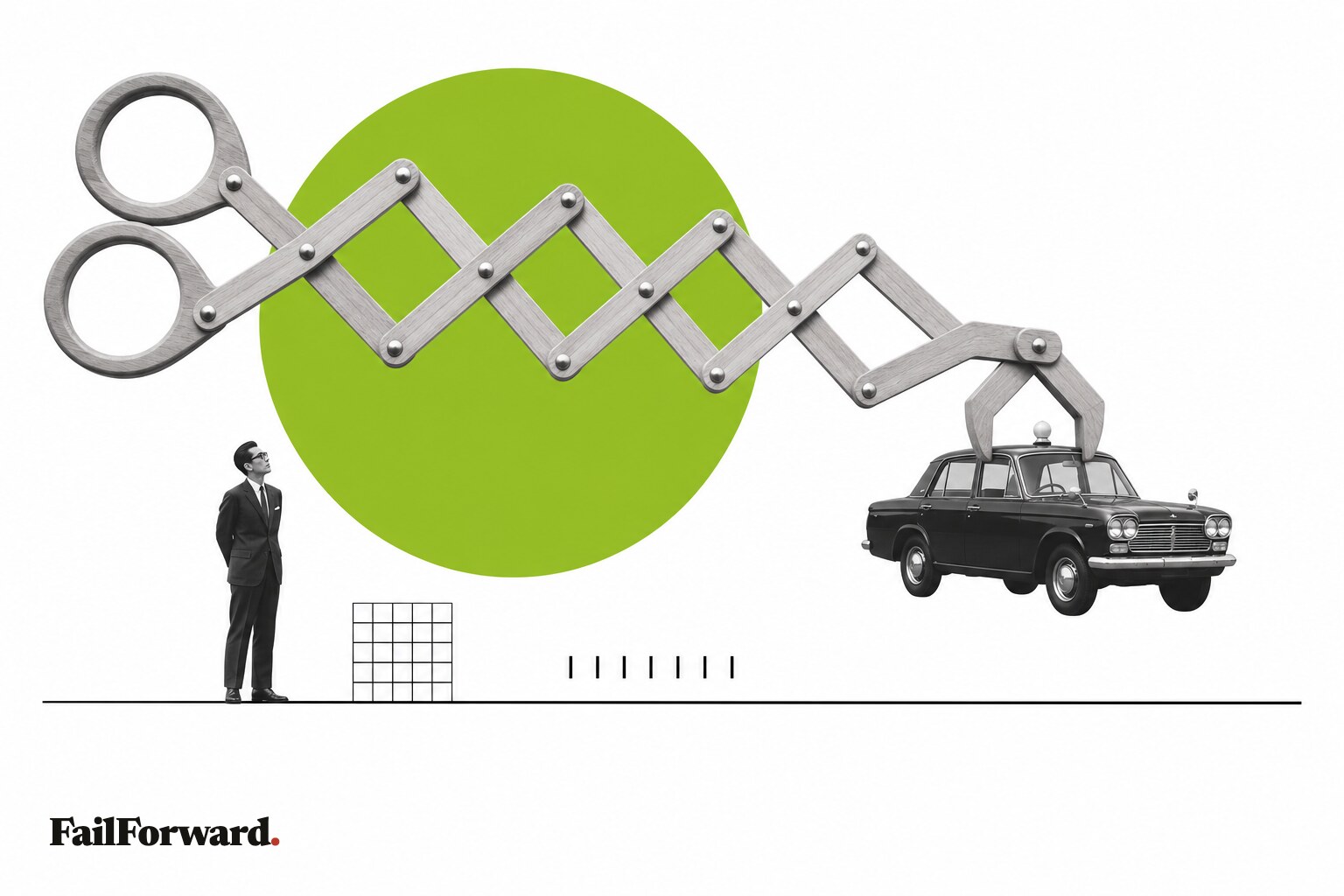
Gunpei Yokoi on the Ultra Hand, writing in the magazine Bungeishunju in 1996Yamauchi wanted more than cards: safe, practical businesses, as the Nintendo historian Isao Yamazaki puts it. In 1960 he set up a taxi company, Daiya Kotsu, with a playing-card diamond as its emblem; at its peak it ran nearly 40 cars. In 1961 Nintendo went into instant food with the textile maker Omi Kenshi and built a factory in Uji for instant rice, a Disney-branded rice seasoning and Popeye Ramen. In 1962 it listed its shares in Osaka and Kyoto, and in 1963 it dropped 'Playing Card' from its name.
The food never caught on. David Sheff, in Game Over, his 1993 history of the company, called the instant rice 'a dismal failure', and Nintendo left the business in 1965. Cards faltered too: in 1964, the year of the Tokyo Olympics, sales of the Disney decks began to fall, and with the side ventures losing money, profits shrank. The share price, which had soared after the 1962 listing, fell steeply.
Most retellings add a love hotel. The earliest known source is a paragraph in Sheff's book, which says Yamauchi 'opened a "love hotel," with rooms rented by the hour' and calls it 'a personal passion'. It names no hotel, place, date or source. In 2022 Yamazaki told the Japanese blog Famicom no Neta that he had checked every securities report Nintendo filed after its 1962 listing and found no such business; the blog's author found nothing in some 20 Japanese books on Nintendo from that era. No record shows that Nintendo ran a love hotel, and nothing proves that Yamauchi did. The vacuum cleaner in the same retellings, the 1979 Chiritory, was a radio-controlled toy.
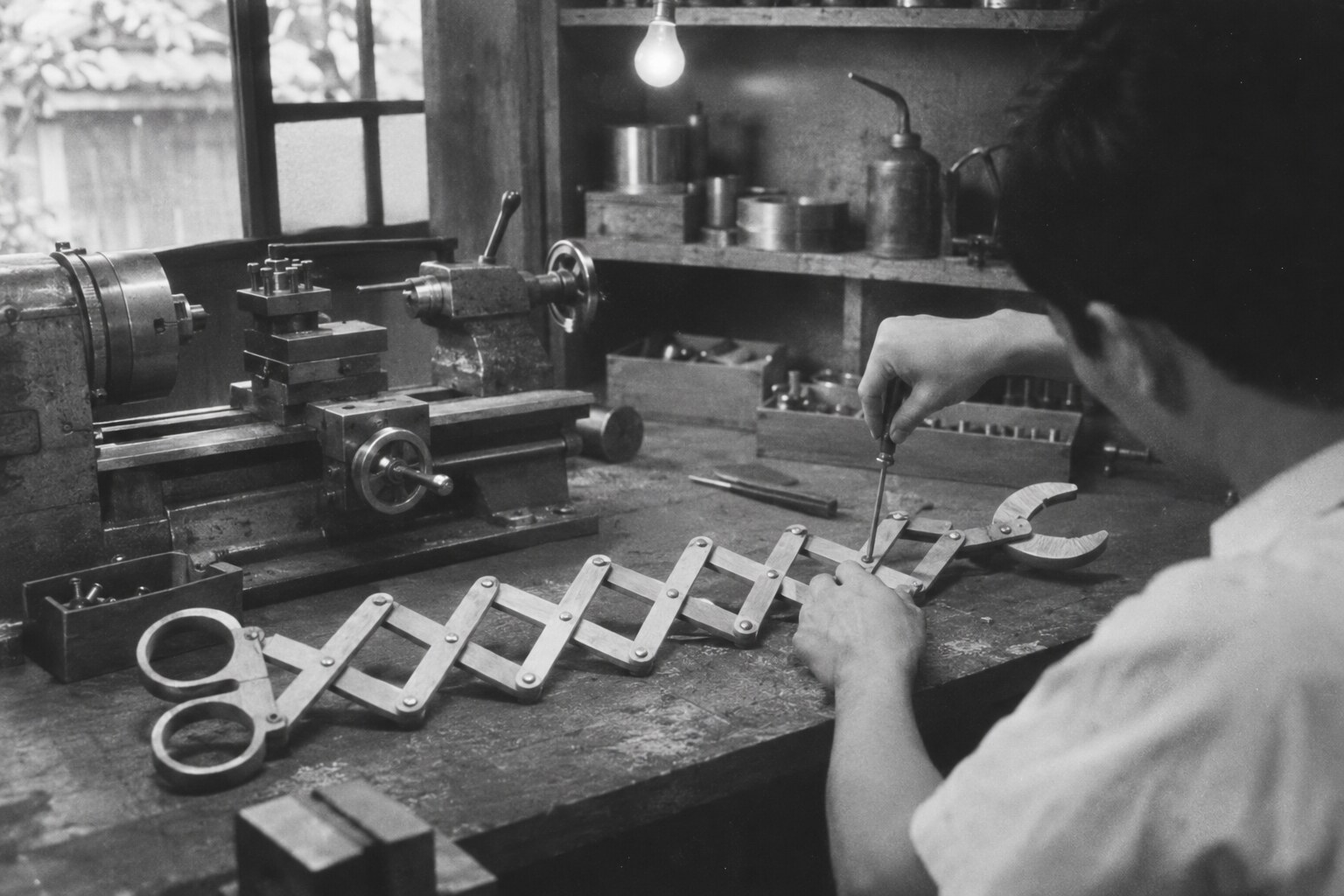
The way out came from the maintenance room. Gunpei Yokoi, a young electrical engineer, joined in 1965 to look after the card-making machines; he believed he had been hired because a new law required a chief electrical engineer on site. Bored, he used the factory's lathes to make toys. One day, he recalled in 1996, Yamauchi saw one and told him to bring it to the executive office. Yokoi expected a scolding. Instead, Yamauchi said he wanted to make it a product and sell it.
The toy was an extending lattice arm, and Yamauchi named it the Ultra Hand, after 'Ultra C', a phrase in fashion since the Tokyo Olympics. Released in 1966, it sold more than 1.2 million at a time when 100,000 made a toy a hit; Yokoi put the figure at 1.4 million. Yokoi got a development section, and more toys followed. By Yamazaki's count, sales doubled between 1967 and 1969, and cards fell from 70 per cent of them to 30. In 1969 the taxi firm, which by some accounts made money, went to the Meitetsu group after talks with the drivers' union broke down.
The road was not straight: the 1973 oil shock brought a wave of cancelled orders for laser clay-shooting ranges and left Nintendo deep in debt. The fortune came from electronic games: Game & Watch in 1980 and the Family Computer in 1983. Sheff writes that Yamauchi had decided new ventures should use what Nintendo already had, a card distribution network reaching toy and department stores across Japan. In a 1993 lecture he drew the line himself: colour televisions, fridges and washing machines are things people need, but an entertainment machine that costs several hundred dollars 'will not sell unless it is fun'.
Questions
Did Nintendo run love hotels?
No record shows that it did. The earliest known source is one paragraph in David Sheff's 1993 book Game Over, which names no hotel or source; the historian Isao Yamazaki found no such business in any securities report Nintendo filed after its 1962 listing.
What did Nintendo do before video games?
It made playing cards, starting with hanafuda in 1889. In the 1960s it also ran a taxi company and sold instant rice and Popeye Ramen; after the Ultra Hand toy of 1966 it turned to toys, then to Game & Watch in 1980 and the Family Computer in 1983.
Who invented the Ultra Hand?
Gunpei Yokoi, an engineer hired to maintain Nintendo's card-making machines, who built the extending arm on the factory lathes out of boredom. Hiroshi Yamauchi had it turned into a product; released in 1966, it sold more than 1.2 million.
Sources
- Nintendo: Company History
- Isao Yamazaki, Nikkei Business: Nintendo stalled by entering other industries, then rebounded with toys and game consoles (2022, in Japanese)
- Gunpei Yokoi, Why I Left Nintendo, Bungeishunju, November 1996 (Bunshun Online, in Japanese)
- Famicom no Neta: Is it true that Nintendo ran a love hotel? (2022, in Japanese)
- Automaton West: a Famicombox in a love hotel revives the 'Nintendo love hotel' myth (2026)
- Takuya Kura, Nintendo's Success and Failure, Doshisha Business Case 06-01 (2006, in Japanese, PDF)